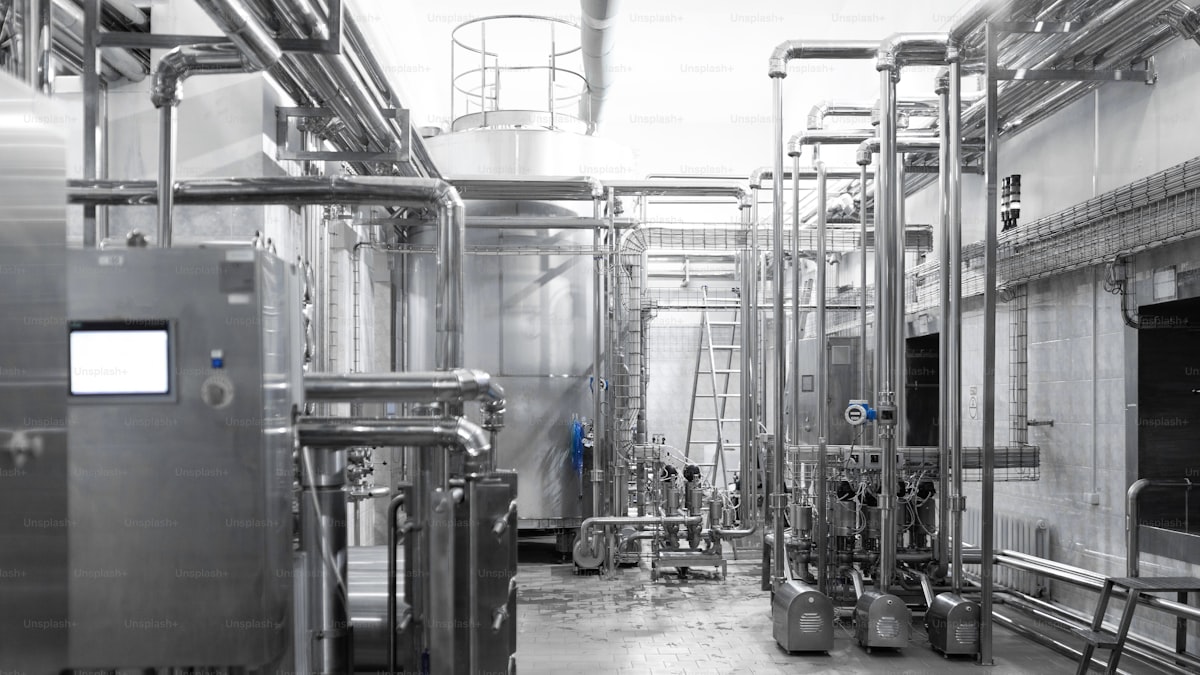
One of the most common questions we hear from powder coaters is whether a 3-in-1 phosphating solution can truly replace the traditional multi-tank pretreatment line. The honest answer is: it depends on your operation. Both approaches have their place, and understanding the trade-offs will help you make the right decision for your shop.
The Traditional 7-Tank Process
The conventional phosphating line is a series of tanks through which parts are moved sequentially:
- Alkaline degreasing tank — Removes oils, greases, and shop soils
- Water rinse tank — Flushes away degreasing chemicals
- Acid pickling tank — Removes rust, mill scale, and oxide layers
- Water rinse tank — Removes acid residues
- Activation tank — Conditions the surface with a titanium-based solution to promote fine, uniform phosphate crystal growth
- Phosphating tank — Forms the zinc or iron phosphate conversion coating
- Final rinse tank — Removes loose salts; may include a chromic or non-chrome passivation rinse
This process is the gold standard. It produces a heavy, uniform, crystalline zinc phosphate coating with excellent corrosion resistance and paint adhesion. Automotive manufacturers, appliance makers, and large-scale fabricators rely on this process to meet stringent quality specifications.
The 3-in-1 Approach
A 3-in-1 phosphating solution combines degreasing, derusting, and phosphating into a single chemical step. You apply one product, and it performs all three functions simultaneously. The result is an iron phosphate conversion coating on a clean, rust-free surface.
The process is dramatically simpler:
- Apply the 3-in-1 solution — by brushing, sponging, spraying, or dipping
- Allow to react and dry — typically 30 to 45 minutes at room temperature
- Proceed to powder coating — no additional rinsing required
That is it. Three functions, one step, one product.
Cost Comparison
The cost differences between the two approaches are substantial:
Capital Investment
A 7-tank line requires tanks (typically mild steel lined with PVC or polypropylene), heating systems for the degreasing and phosphating tanks, pumps, agitation systems, overhead conveyors or hoists, ventilation, and an effluent treatment plant. For a modest-sized line, you are looking at an investment of several lakhs to crores of rupees, depending on capacity.
A 3-in-1 setup requires a non-metallic container for the solution and a polyurethane brush or sponge. The capital investment is negligible.
Operating Costs
The 7-tank process consumes significant quantities of water (for rinsing), electricity (for heating), and chemicals (seven different products to maintain). You also need regular water quality testing, bath analysis, sludge removal, and effluent treatment. Labour costs are higher because the process requires trained operators to maintain bath chemistry.
A 3-in-1 solution has minimal operating costs. There is no heating, no water consumption for rinsing, and only a single product to purchase and manage. The chemical cost per square metre treated is typically comparable or lower.
Space Requirements
A 7-tank line with adequate spacing for operator access and drainage typically needs 15 to 30 metres of floor space. A 3-in-1 setup needs a workbench.
Quality Comparison
This is where the nuance matters.
A zinc phosphate coating from a 7-tank line typically achieves coating weights of 1.5 to 4.0 g/m2 and provides the highest level of corrosion resistance. It is the standard for products that will face severe outdoor exposure, salt spray environments, or need to meet automotive OEM specifications (such as 500+ hours of salt spray resistance).
An iron phosphate coating from a 3-in-1 process typically achieves coating weights of 0.3 to 1.0 g/m2. It provides excellent adhesion and good corrosion resistance for general-purpose applications. Products pretreated with 3-in-1 phosphating consistently pass IS 101 cross-hatch adhesion tests and perform well in moderate environmental conditions.
In plain language: the 7-tank process produces a superior coating for demanding applications, while the 3-in-1 process produces a perfectly adequate coating for the vast majority of powder coating work.
When Each Approach Is Appropriate
Choose the 7-tank process when:
- You are coating for automotive OEMs or other customers with stringent salt spray specifications
- Your products will be exposed to severe marine or industrial environments
- You have the volume to justify the capital investment (typically thousands of square metres per day)
- You need zinc phosphate specifically (required by some specifications)
- You have space, water supply, and effluent treatment capability
Choose a 3-in-1 solution when:
- You are a small or medium powder coating shop
- Your products are for general industrial, architectural, or consumer use
- You are doing on-site or field work where a tank line is impractical
- You are treating oversized parts that will not fit in a dip tank
- You need to phosphate infrequently and cannot justify a dedicated line
- You want to start with proper pretreatment without a large capital outlay
The Sweet Spot for 3-in-1
The reality is that the majority of powder coating shops in India are small to medium operations. They coat gates, railings, furniture frames, electrical enclosures, agricultural equipment, and general fabrication work. For these applications, a 3-in-1 phosphating solution provides the right balance of quality, cost, and practicality.
Many shops that have switched from bare-metal powder coating (with no pretreatment at all) to using a 3-in-1 phosphating solution report dramatic improvements in coating adhesion and a near-complete elimination of early coating failures. The improvement from "no pretreatment" to "3-in-1 pretreatment" is far more significant than the incremental improvement from "3-in-1" to "full 7-tank."
A Practical Recommendation
If you are not currently phosphating before powder coating, start with a 3-in-1 solution like InstaPhos. The quality improvement will be immediate and dramatic. If your business grows to the point where you need zinc phosphate for high-specification work, you can always invest in a multi-tank line later — but you may find that 3-in-1 phosphating meets your needs indefinitely.